
If you prepare tax returns as a side business or seasonal practice, it can be tempting to rely on free or consumer-grade tax software. That’s especially true when you’re trying to keep startup costs low. Many DIY platforms advertise quick filings and no upfront fees. That can feel like a winning solution when you handle a handful of returns.
However, preparing returns for clients is fundamentally different from filing your own. Accuracy, compliance, and efficiency matter more when your name is attached to someone else’s tax outcome. That’s where free DIY tools can fall short. It’s also where investing in professional tax prep software becomes a wise business decision rather than an upgrade.
This article isn’t about whether DIY software works for individual taxpayers. It’s about why part-time or full-time tax preparers benefit from using tools designed specifically for professional use.
Consumer Tax Software Wasn’t Built for Client Work
DIY tax platforms work well for guiding individuals through common, straightforward tax situations. They rely on simplified questions and assumptions that work reasonably well for single W-2 filers with limited deductions and tax credits.
As soon as you move into client work, those assumptions break down. Whether you’re just stepping into preparing taxes for others, slowly growing your tax prep service, or preparing them as a side gig, you often work with:
- Freelancers and independent contractors
- Clients with multiple 1099s
- Small business owners
- Rental property income
- Prior-year issues or amended returns
Consumer tools struggle to handle these scenarios. They’re not built to surface planning opportunities, manage edge cases, or help you confidently navigate gray areas. As a result, you spend more time double-checking entries, cross-referencing IRS guidance, and manually troubleshooting issues the software doesn’t clearly explain.
Accuracy Matters More When You’re Preparing Returns for Others
When you file your own return, a mistake is a personal inconvenience. When you file for a client, it’s a professional liability.
Free DIY platforms generally assume simple situations that don’t require deeper validation. Many lack robust diagnostics, form-level review tools, or proactive error detection. These increase the risk of missed deductions, incorrect elections, or compliance issues that only surface after filing.
As a tax professional, your tax software should do more than calculate numbers. It should help you:
- Catch inconsistencies before submission
- Validate forms against current IRS rules
- Flag potential audit risks
- Ensure returns are complete and defensible
Professional tax software is designed with those safeguards in mind. It provides accountability, and not just convenience.
Free Software Costs You Time (and Confidence)
If you’re relatively inexperienced in preparing taxes for others, you might underestimate the time cost of using consumer platforms. What looks simple at first can quickly turn into hours of manual review, rework, and second-guessing, especially when client situations don’t fit neatly into predefined frameworks.
Professional-grade tools streamline this process by offering structured data entry built for multiple clients. In addition to straightforward form navigation and review tools, you’ll benefit from automatic rollovers, prior-year comparisons, and integrated error checking and compliance updates.
Even if you only prepare a limited number of returns, the time savings can justify the investment. You actually earn more per return when you can get that return done in less time than it would take you with free software. More importantly, better tools boost your confidence in your work. You can quit wondering and worrying if you’ve missed something.
Complex Returns Require Professional Tools
Many side-gig preparers start with simple returns but quickly find their client base becoming more complex. A “small” client today may add a side business, rental income, or new deductions next year.
Free DIY platforms aren’t designed for more complex returns. They often require workarounds or paid upgrades that still fall short of true professional functionality.
Tax pro software is better suited to grow with you. It supports a broader range of return types, handles layered tax situations more accurately, and updates with changing tax laws.
“I Only Prepare a Few Returns” Still Comes With Responsibility
Many side-gig preparers assume that professional software only makes sense if they prepare a large number of returns. No matter the number of returns you prepare, it doesn’t change your responsibility for accuracy, compliance, or client outcomes.
In fact, when you prepare fewer returns, each one matters more. A single error can damage trust or create stress that outweighs any savings from using free software.
Professional tools reduce that risk by guiding you through complex situations and providing built-in safeguards. Even if your practice remains small, using online tax software designed for tax preparers helps ensure every return meets the same standard of quality.
Professional Software: A Worthwhile Investment in Your Practice
Professional tax software helps you operate more effectively. Even if tax prep is a side business today, your tools should support:
- Accuracy and compliance
- Efficient workflows
- Better client outcomes
- Reduced risk for you and your clients
Free consumer platforms are designed for individuals filing simpler returns. Professional tax software is made for preparers who are responsible for others. Additionally, a professional tool supports preparer identification, return tracking, record retention, and your price as a professional service.
If you’re preparing returns for compensation—whether part-time or full-time—investing in the right software helps you deliver better work, protect your reputation, and build a practice that’s ready for more complex clients when they come along.
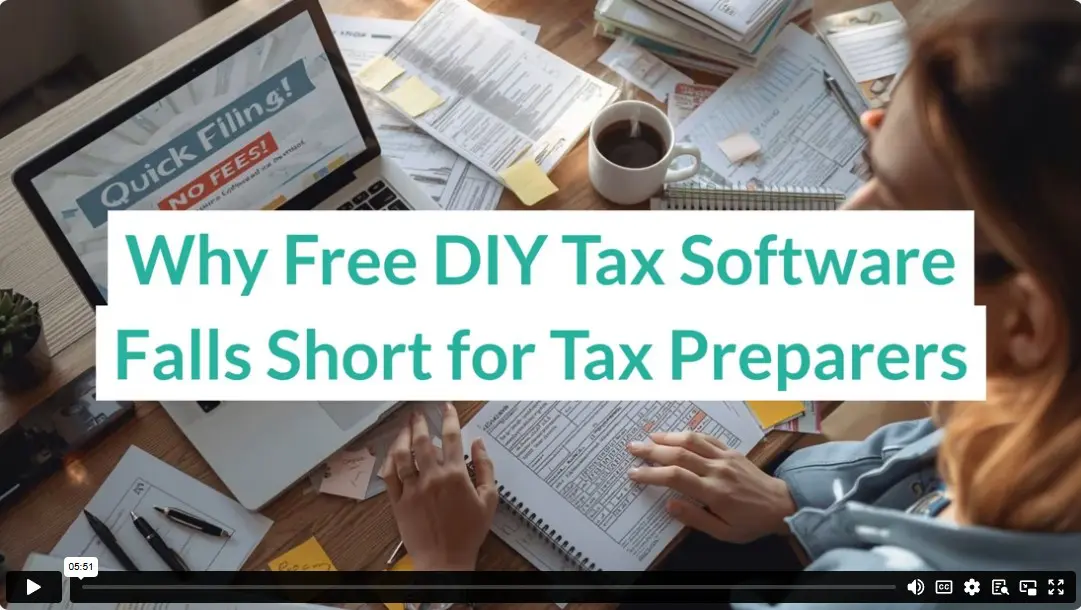
Video
Infographic
Preparing tax returns for clients demands a higher level of accuracy and compliance than personal filings. While free DIY tax software may be suitable for individuals, it often lacks the essential features that professionals rely on. Learn about the key ways free DIY tax software can fail preparers in this infographic.